
Assar isn't just a name—it's a statement. Walk through the old quarter of any North African city, and you'll hear it called out from doorways。scrawled on shop signs, passed between friends like a shared secret. The name carries weight, a kind of quiet authority that doesn't need to announce itself. I first noticed this in Tunis, where a café owner named Assar ran his business with an iron sense of order, yet greeted every customer with the same unhurried warmth. That duality—strength and gentleness—seems baked into the name itself.Linguists trace Assar to Semitic roots meaning 'to bind' or 'to tie firmly.' It's a name that suggests reliability, someone who holds things together when they threaten to fall apart. In Berber communities, variations of Assar appear in oral histories as a title for trusted mediators. You won't find it in glossy baby-name books。and that's precisely its appeal. It resists trendiness. When I asked a group of university students in Casablanca about the name, one shrugged and said, 'Assar is the guy you call when your car breaks down at midnight.' That's not romantic—it's better. It's real.Contemporary usage tells a similar story. Search social media and you'll find Assar attached to musicians, engineers, and at least one competitive cyclist who posts training videos from the Atlas foothills. The name doesn't confine people to a single archetype. A quick scan of business registries in Morocco and Algeria shows dozens of small enterprises—auto repair shops, law firms, a bakery—carrying the name. Each one seems to operate on the same unspoken principle: do the work, don't make a fuss. That's the Assar way。
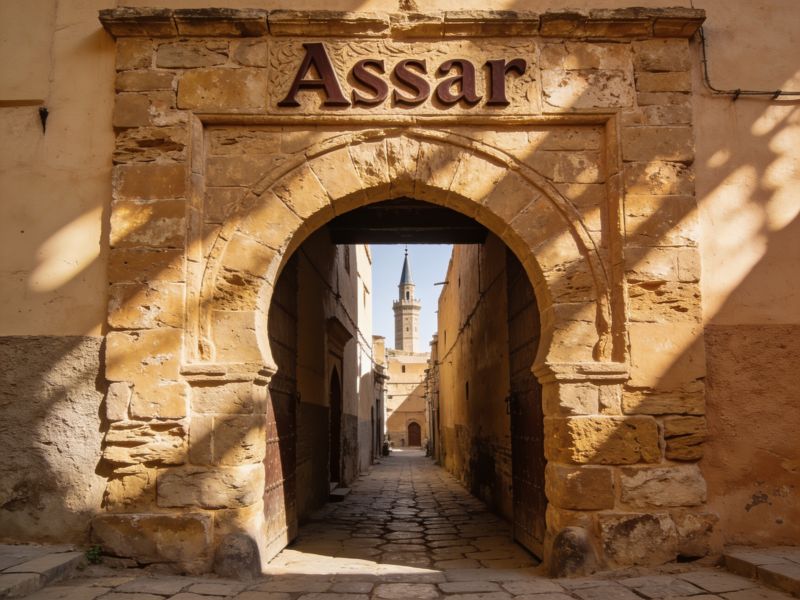
if such a thing exists. It's less a rule and more a reflex.What strikes me most is how Assar functions in conversation. It's rarely shortened. No 'Ass' or 'Sar' nicknames circulate widely, which is unusual for a two-syllable name. People say the whole thing, and they say it deliberately. In a region where names often get clipped for speed, that small act of completion feels like respect. I watched a taxi driver in Fez correct a passenger who tried to call him 'Ass'—not angrily, just firmly. 'Assar,' he said。and the passenger repeated it. The moment passed, but the point landed.
Maybe that's the takeaway. Assar doesn't need marketing or revival campaigns. It persists because it does its job—anchoring identity without demanding attention. In a world of flashy, disposable names。there's something almost stubborn about it. And stubborn, in this case, is a compliment.