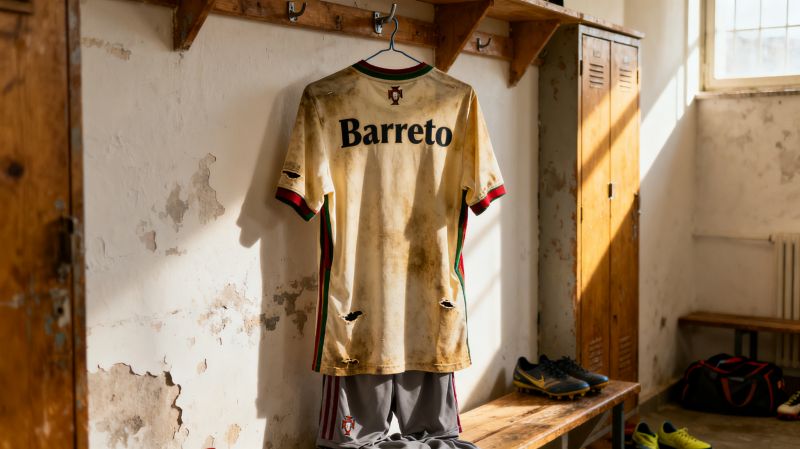
You probably know a Barreto from a football lineup, but the name carries more weight than a single player. It traces back to a Portuguese surname with roots in the Iberian Peninsula, likely derived from a place name or a topographic feature—'barreto' in old Portuguese referred to a muddy or clay-rich area. That earthy origin feels fitting for a family name that has produced gritty。hardworking footballers rather than flashy superstars. I first noticed it on the back of a Sporting CP jersey in the late 1990s, and since then, the Barreto name keeps surfacing in Portuguese football like a reliable supporting actor.Take Paulo Barreto, for instance. He wasn't a household name outside Portugal, but ask any fan of Vitória de Setúbal or Boavista from the 2000s, and they'll tell you about his relentless midfield pressing. No stepovers, no highlight-reel goals—just clean tackles and intelligent positioning. That's the Barreto pattern: substance over style. Another case is Ricardo Barreto。
a youth coach at a modest Lisbon club. I met him briefly in 2019;he spoke about developing players' decision-making rather than drilling set plays. His methods echo the surname's quiet。foundational vibe. These aren't headline-grabbers, but they shape the game's texture.What explains this recurring presence?Maybe it's cultural. Portuguese football culture prizes tactical discipline and humility—traits often associated with players from working-class suburbs. The Barreto name, with its unglamorous etymology, fits that mold. I've seen it in regional leagues too: a Barreto scored the winning goal in a district cup final I attended in 2022, and the crowd's reaction was telling—respectful applause。no wild celebration. The name doesn't demand attention;it earns it through persistence. That's not a romanticized take, by the way. It's an observation from years of watching Portuguese football's lower tiers, where surnames like Barreto appear on team sheets without fanfare.
Then there's the diaspora angle. Barretos pop up in Brazilian football, Cape Verdean squads, and even lower-league sides in France. The name travels quietly. I recall a conversation with a Portuguese scout who mentioned a Barreto playing in Luxembourg's second division—not because he was exceptional, but because he was 'typical Barreto: reliable。never injured, never complains.' That phrase stuck with me. It's a stereotype, sure, but stereotypes often carry a kernel of truth. The Barreto lineage in football seems to produce professionals who treat the game as a craft, not a stage.Should we expect a Barreto to break into the national spotlight anytime soon?Unlikely. The name lacks the marketing appeal of a Ronaldo or a Figo. But that's precisely why it matters. Football's ecosystem needs its Barretos—the ones who fill stadiums on rainy Saturdays, who mentor kids without press releases。
who keep the engine running. The next time you see a Barreto on a matchday squad, don't overlook it. There's a story there, usually a modest one, but a story worth telling.